exploring cross-cultural encounters in the early modern world
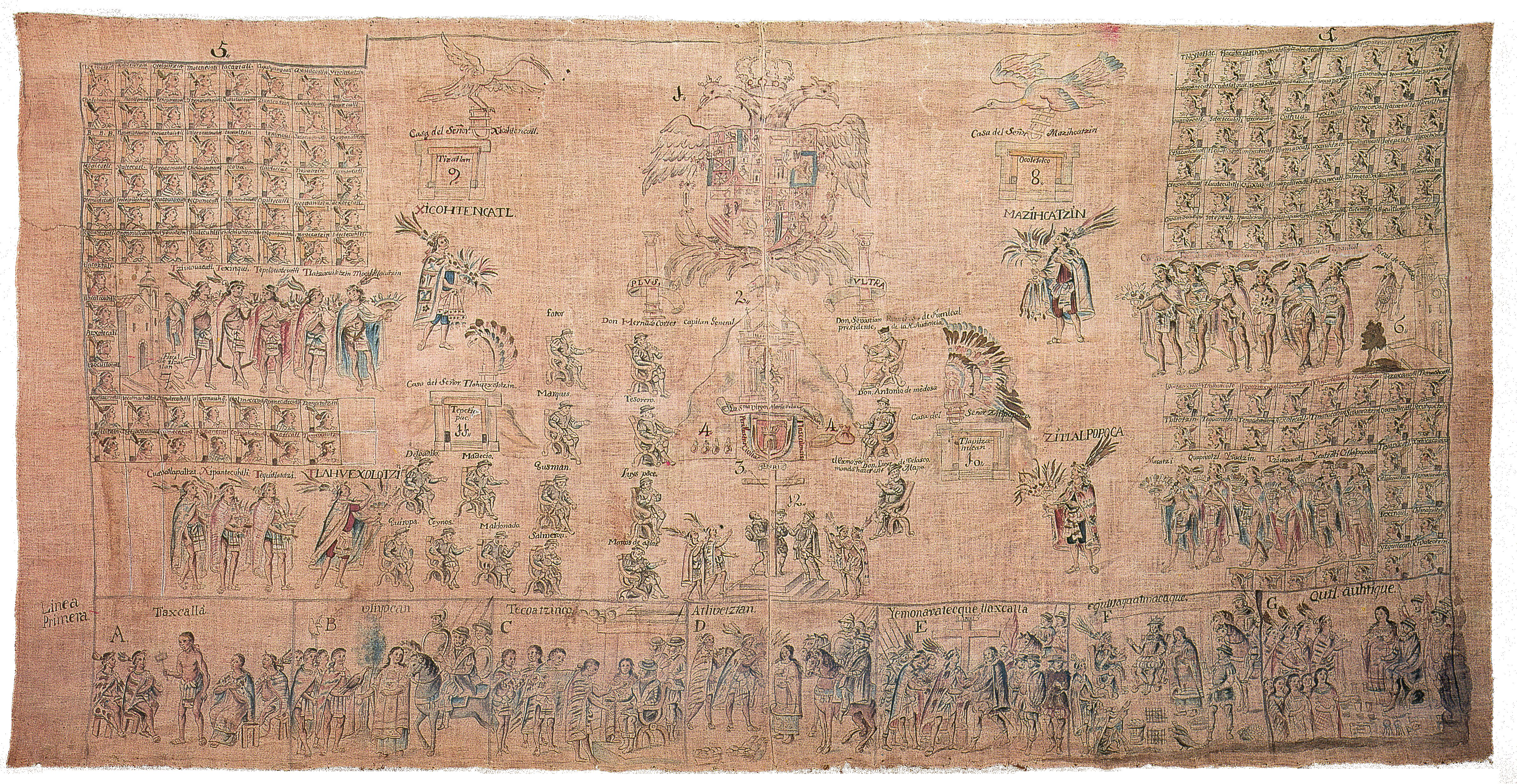
IMAGE 18: ‘Main scene of the 1773 copy of the Lienzo de Tlaxcala.’ Description: A copy [of the sixteenth-century lienzo] was painted in 1773, in an updated eighteenth-century style. Shading was used extensively in this copy to give bodies and draped clothing an appareance of three-dimensionality…In 1787 municipal official Nicolás Faustino Mazihcatzin y Calmecahua wrote an image-by-image description of the cloth, and said that it had been created during the reign of Viceroy don Luis de Velasco (1550-1564). Mazihcatzin also claimed that three copies once existed: one created to be sent across the Atlantic to the Emperor, one created to be sent to the Viceroy in Mexico City, and one to be kept in Tlaxcala. The 1773 copy still survives, housed in storage at the Museo Nacional de Antropología in Mexico City. The fate of the original cotton cloth (or cloths, if three were painted) is unclear. One was still in Tlaxcala until the 1860s. Then, during the French occupation of Mexico (1862 – 1867), the sixteenth-century Lienzo was taken from Tlaxcala to Mexico City so that a copy could be made by the French Scientific Commission, when the Emperor Maximilian was executed…[a]nd the French driven out, Tlaxcalan authorities tried to recover their stolen document. But it could not be found, and remains lost.’ Information and image from ‘Introduction to the Lienzo de Tlaxcala: History and Publications’, Mesolore.

 The Global History Podcast